






Three illuminated two-story brick houses on a tree-lined residential street photographed at twilight, with warm window light and landscape uplighting visible against a deep blue evening sky.

AC Installation in Sioux City, IA

Tell us about the job

Takes about a minute. No obligation.

New system or replacementCentral ACWoodbury County, IA
Step 1 of 2

What ZIP code is the job in?

Most homes in Woodbury County heat with utility gas, 59.8 percent. That usually means a gas furnace paired with a central air conditioner, the two sharing the same ductwork and the same blower. If your AC is going in alongside a gas furnace, the installer still has to match the new coil to that furnace's blower, since the furnace isn't being replaced. Electricity heats 32.3 percent of homes here, which often points to a heat pump or an air handler setup instead of a furnace and coil. Either way, what's already in place for heat shapes what the AC installation looks like.

3 months
June through August, your air conditioner is on duty
83°F
the average summer afternoon it cools against
55 hail events
in ten years, and hail bends the fins on outdoor coils
13.4 SEER2
the federal minimum any new unit must meet
Isometric cutaway illustration of a house showing interior ductwork, an air handler, and an outdoor condenser unit connected by lines, with simple furniture in the rooms.
Your air conditioner works hardest from June through August.

NOAA nClimDiv, 1991–2020 normals

Summer in Woodbury County runs about three months, June through August.

A standard size and efficiency rating handles three months of cooling here without paying for more than the job needs.

Half the homes in Woodbury County were built by 1959, before central air was standard

Half the homes here were built by 1959
Cooling runs June through August
Summer afternoons average 83°F
Install in May, before cooling startsCooling in Woodbury County starts in June. Get the new system in before then.

Woodbury County sits in zone 5A, a cool, humid climate where furnaces carry more of the year's work than air conditioners do. Any split-system air conditioner installed here still has to meet the federal minimum of 13.4 SEER2, the rating that applies to units under 45,000 Btu/h built from 2023 on. That floor is the same whether the home leans on a gas furnace for winter or runs electric heat. It doesn't set how big the system should be, that comes from the house itself, but it does rule out anything below that efficiency mark. A new system paired with an older furnace or air handler still needs a coil that meets this standard, even if nothing else in the setup is changing.

A standard AC, sized for Woodbury County summers

A standard system holds up fine here. Woodbury County sees its share of wind, hail and winter storms, but none of that changes what an air conditioner needs to handle. It still has to cover a summer of heat, nothing more. If your AC is going out, or going in for the first time, there's no reason to size up or pay for a higher efficiency rating than the house calls for.

Find a contractor
A gray residential air conditioner condenser unit mounted on a concrete pad in an open grass field.

A new system still has to work with an old house

Since half the homes here were built by 1959, don't assume the old ductwork or old electrical panel can just take whatever new system you pick. Before you settle on a unit, have the installer check what's already running through the house, the duct sizing, the electrical capacity, whatever the setup is. The right size AC for this climate still has to move through what's already there.

Ask for a load calculation, not a guess

A contractor should size the system by doing a room by room load calculation on the house, checking window area, insulation and duct layout. Going by the old system's size or a rule of thumb can land you with a unit too big, which cools the air fast but never runs long enough to pull humidity out.

Ask what happens to the existing ductwork

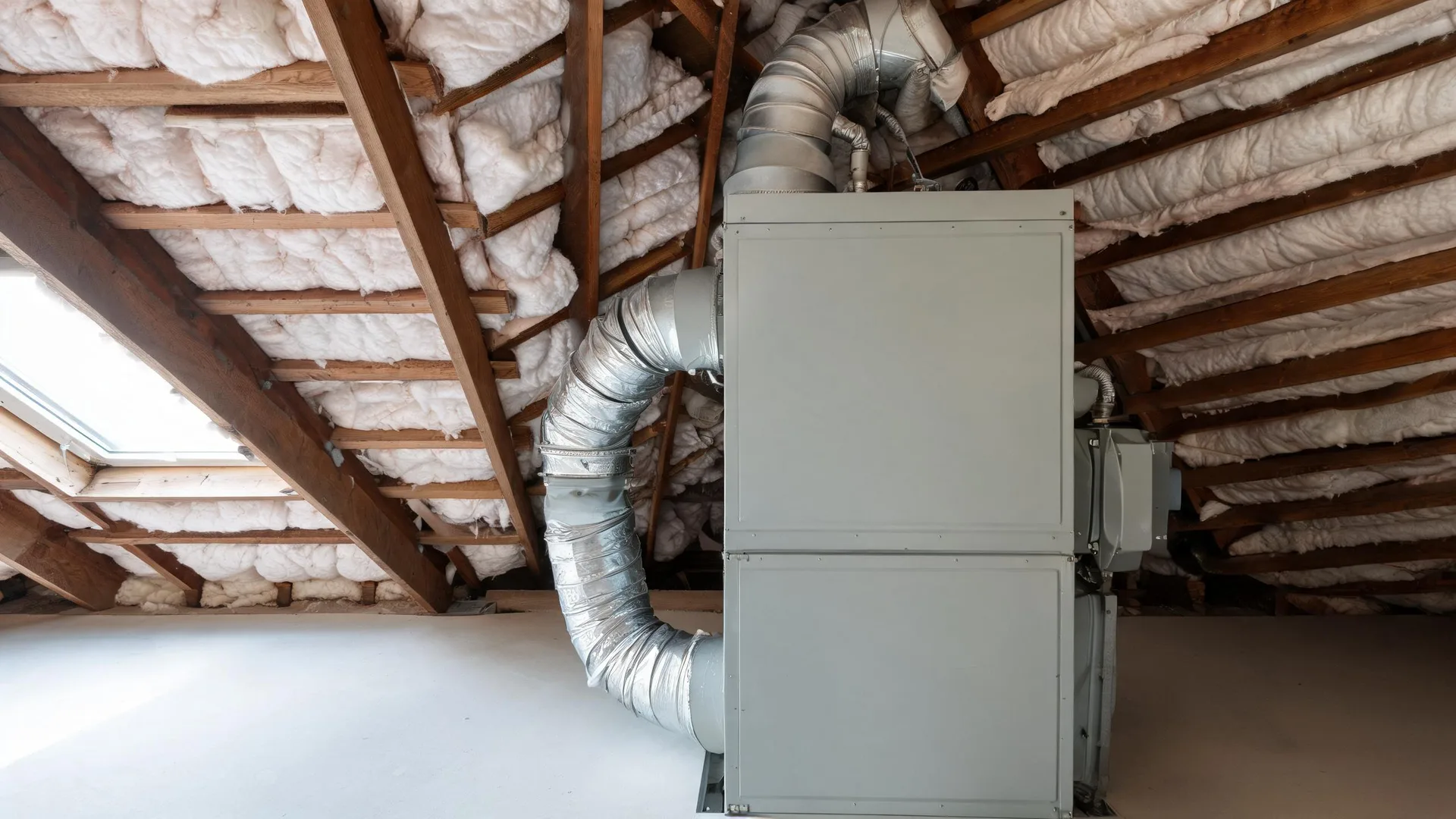
The new coil has to match airflow with whatever ducts and blower are already moving air through the house. If the ducts are undersized or leaky, the best coil and compressor in the world won't deliver the comfort the rating promises. Get that checked before the equipment is chosen, not after it's installed.

Overhead view of a gray residential air conditioning condenser unit mounted on a concrete pad beside a house with asphalt shingle roofing.

A higher-efficiency unit would save about $30 a year to run in Woodbury County compared with a new unit at the federal minimum.

  • A higher-efficiency unit$160 a year
  • A new unit at the federal minimum, 13.4 SEER2$190 a year

Estimates for a typical Woodbury County home, from EIA household energy data, Iowa fuel prices and NOAA climate normals. Your home will differ.

Install day starts with the old equipment coming out, not the new one going in. The condenser outside gets disconnected and hauled off, and if the coil inside the air handler or furnace is being swapped too, that comes apart next. The refrigerant lines get cut back or replaced, since reusing old line sets on a new system can carry contamination into the new compressor. Once the new coil is set and the lines are run, the installer brazes the joints, then pulls a vacuum on the whole system to clear out air and moisture before any refrigerant goes in. That vacuum test matters more than people expect, because moisture left in the lines turns to acid over time and eats at the compressor. After the charge is set, the installer runs the system, checks airflow at the vents, and confirms the temperature drop across the coil is where it should be before calling the job done.