







A quiet suburban street at twilight featuring two-story brick homes with illuminated windows and large trees lining the sidewalk.

AC Installation in Storm Lake, IA

Tell us about the job

Takes about a minute. No obligation.

New system or replacementCentral ACBuena Vista County, IA
Step 1 of 2

What ZIP code is the job in?

Most homes in Buena Vista County heat with utility gas, at 54.8 percent. Electricity comes next at 31.6 percent, and LP gas heats the rest. That matters for AC installation because a gas furnace usually already has ductwork and a blower in place, and central air uses that same system. If your home heats with gas, adding or replacing central air typically means matching new equipment to the ducts already there. Homes on electric heat can be set up differently, so it's worth checking what your system came with before assuming the same approach applies.

3 months
June through August, your air conditioner is on duty
81°F
the average summer afternoon it cools against
23 hail events
in ten years, and hail bends the fins on outdoor coils
13.4 SEER2
the federal minimum any new unit must meet
Isometric cutaway illustration of a house showing interior ductwork, an air handler and furnace unit, and an outdoor condenser connected by lines outside the wall.
Your air conditioner works hardest from June through August.

NOAA nClimDiv, 1991–2020 normals

Half the homes in Buena Vista County were built in 1964 or earlier.

An older home can mean smaller ducts or returns than a new system expects, so sizing matters more than it would in a newer house.

Power here runs 13.4 cents a kilowatt-hour, cheap enough that a high-efficiency AC takes longer to pay for itself

Power costs 13.4 cents a kWh statewide
Cooling runs June through August
Summer afternoons average 81°F
Three months of work a yearCooling runs about three months a year here, June through August, with afternoon highs averaging 81°F.

Cooling in Storm Lake runs June through August, about three months a year. May is the month before that starts, and it's the better time to put in a new system. A contractor can take the time to size the unit to your ducts and get the refrigerant charge right, instead of rushing a job because the house is already hot. If the old system fails once summer's underway, you're stuck taking whatever can be installed fastest, not necessarily what fits the house best. Getting it done in May means the system is tested and running before it has to work.

Any new AC here has to meet 13.4 SEER2, minimum

Buena Vista County falls in zone 5A, a cool, humid climate where any new split-system AC under 45,000 Btu/h has to meet at least 13.4 SEER2. That's the floor, not a recommendation, so it narrows which units a contractor can offer you. A federal tax credit is available for qualifying high-efficiency equipment, which is worth factoring in if you're weighing a unit above the minimum.

Find a contractor
A man in a dark shirt and tan pants, seen from behind, climbs porch steps toward a dark green paneled door while carrying a worn canvas tool bag, with a potted shrub beside the entry.
An outdoor residential air conditioning condenser unit mounted on a concrete pad, surrounded by gravel with a blue sky in the background.

Match the system to the house, not the other way around

Before a contractor orders equipment, have them check the ductwork and return size at your house, not just the square footage. On a home from this era, that's what decides whether a given unit will actually work once it's installed.

The old unit gets disconnected and hauled off

A contractor recovers the refrigerant from the old system before touching anything, since it can't legally be vented into the air. After that the outdoor unit, the indoor coil, and the line set usually all come out, since old refrigerant lines are rarely the right size for new equipment. What's left of the old system typically goes to a scrap recycler, since the compressor and coils both have value as metal.

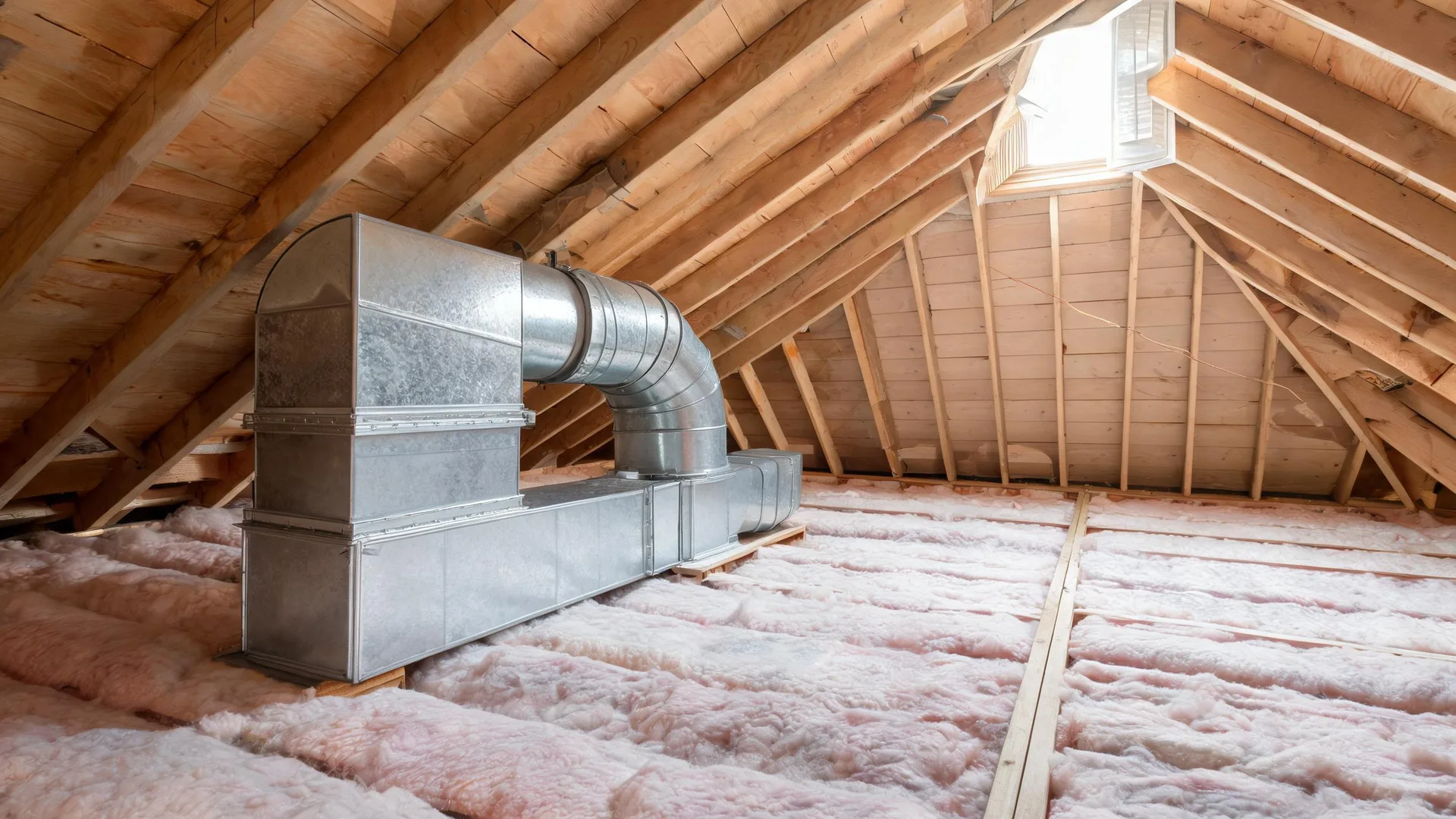
The ductwork from the old system usually stays

Replacing the AC doesn't mean replacing the ducts underneath the house or in the attic. A contractor working on the new install checks those ducts for leaks, crushed runs, or returns that are undersized for the new equipment, since a bigger or more efficient unit pushes more air than the old one did. Whatever the ducts can't handle becomes a problem on day one, not something that shows up later.

An outdoor central air conditioning unit mounted on a concrete pad beside a blue-sided house at sunset.

Going above the federal minimum saves little here, about $20 a year.

  • A higher-efficiency unit$140 a year
  • A new unit at the federal minimum, 13.4 SEER2$160 a year

Estimates for a typical Buena Vista County home, from EIA household energy data, Iowa fuel prices and NOAA climate normals. Your home will differ.

Sizing an AC comes down to how much heat the house gains, not how big the house is. A contractor works that out room by room, counting windows, exterior walls, and ceiling height, then adds it up into a load number. Too big and the unit cools the air fast but shuts off before it pulls the humidity down, so the house feels clammy even at the right temperature. Too small and it can't keep up on the hottest afternoons, running longer than it should and still losing ground. Either mistake also puts the wrong amount of air through the ductwork, which is why sizing has to account for what's already run through the house, not just the tonnage on the old unit. Getting it right the first time is what lets the system coast through the hot months instead of fighting them.