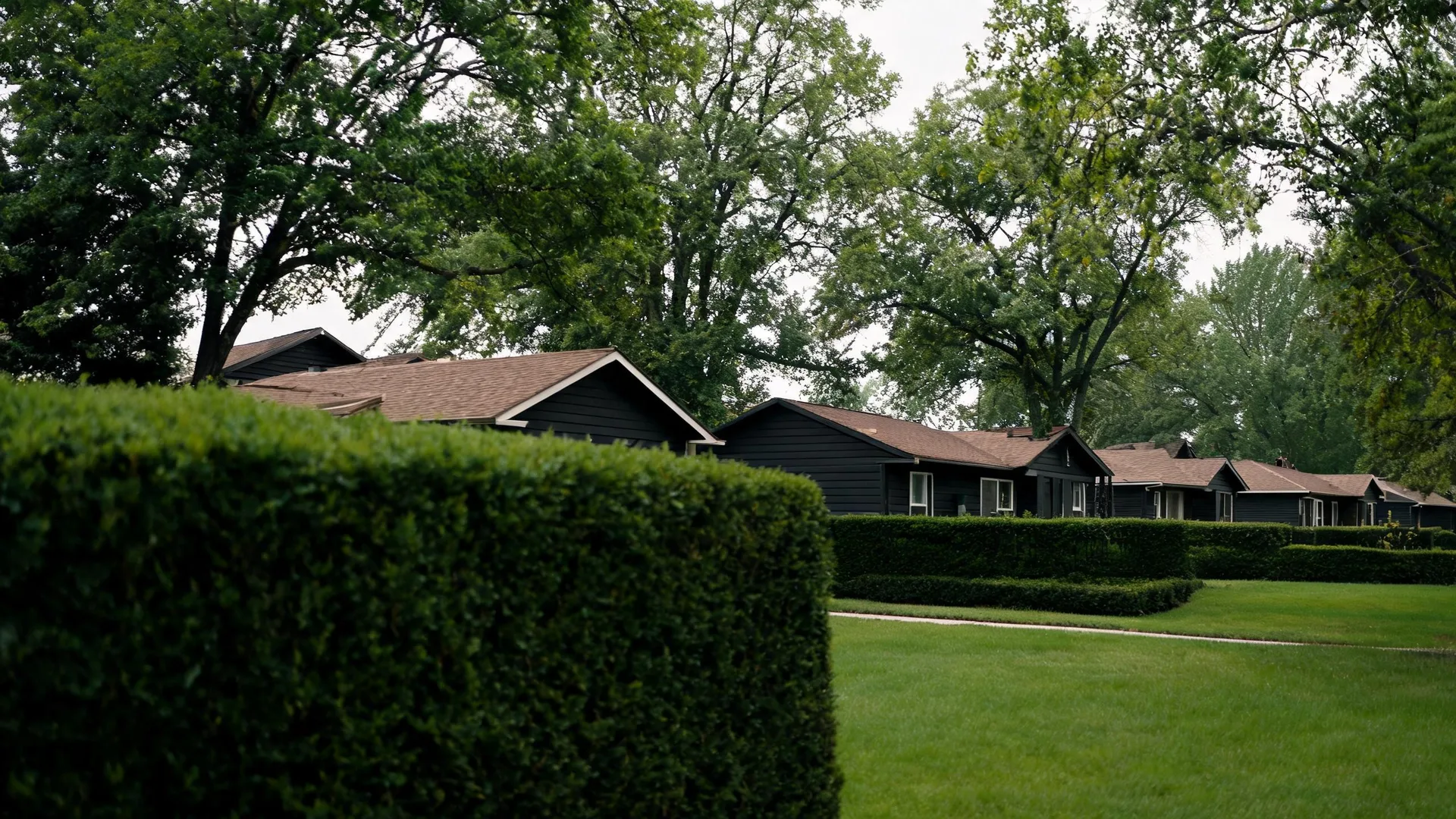





A row of dark-sided single-story cottages with brown shingled gable roofs behind trimmed hedges, mown lawn and a light-colored path, surrounded by large deciduous trees under an overcast sky.

Heat Pump Repair in Clinton, IA

Tell us about the job

Takes about a minute. No obligation.

RepairHeat PumpClinton County, IA
Step 1 of 2

What ZIP code is the job in?

A heat pump here works about eight months a year, October through May, then switches over for June through August. September is when a lot of systems get tested for the first time since spring, and that's when a weak part tends to fail. Same with May, right before cooling starts. If yours is struggling to keep up or short cycling in those first cold or hot weeks, it's usually something that was already wearing out and finally got asked to work harder. Worth getting looked at before you're relying on it every day.

8 months
October through May, your system heats
3 months
June through August, it cools
16°F
the average winter night it heats against
82°F
the average summer afternoon it cools against
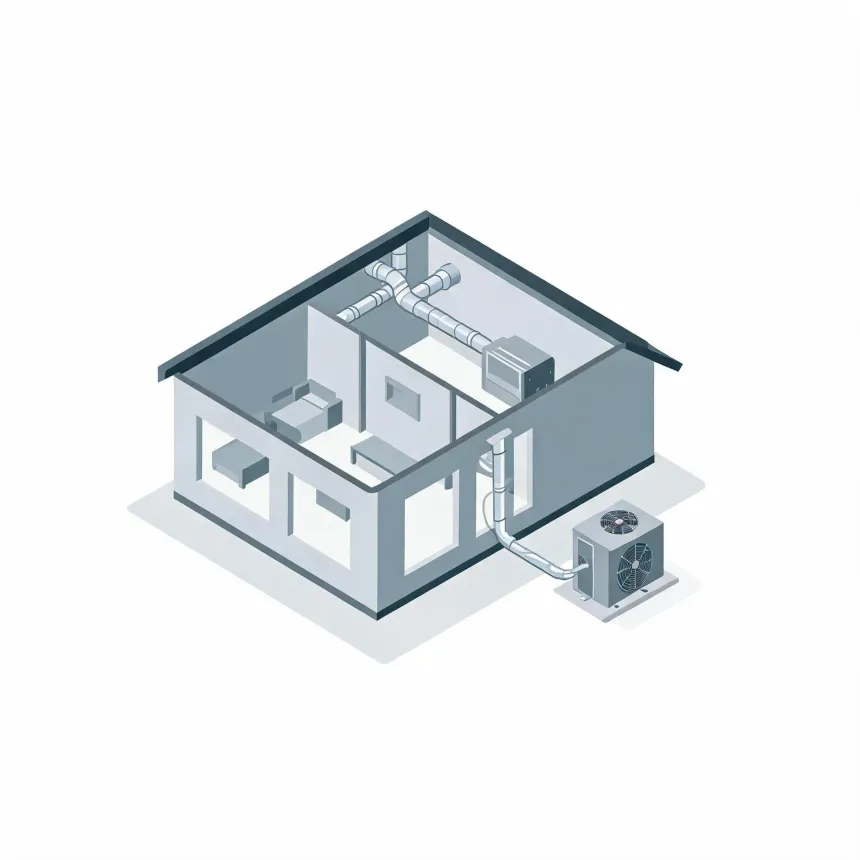
Isometric illustration of a cutaway house showing interior rooms, ceiling ductwork and an air handler, connected by lines to an outdoor condenser unit on a pad beside the building.
Your system heats October through May and cools June through August.

NOAA nClimDiv, 1991–2020 normals

Clinton County winters average 16°F at night in December, January and February.

Your heat pump has to work for that every night, and a weak part is what usually gives first.

Half the homes in Clinton County are old enough that their heat pump may be too

Half the homes here were built by 1957
75 damaging wind events from 2015 to 2024
50 hail events from 2015 to 2024
Clinton County weather isn't why your heat pump is acting up171 severe weather events hit the county between 2015 and 2024. Most heat pump trouble still comes down to a worn part.

Nothing about Clinton County is hard on a heat pump in any unusual way. It's the usual cold nights and hot afternoons, and the usual parts wear out the usual way, a failing capacitor, a low charge, a defrost control that's stopped doing its job. What changes is the bill. Iowa homes paid 13.40 cents per kilowatthour in 2024, and a heat pump running on a weak part has to run longer to make the same heat or the same cooling. That shows up on the meter before it shows up as a breakdown. Fixing the part that's actually failing is what stops it.

Before you pay for a repair, ask how much life is left

If your heat pump came with the house, find out its age before you sink money into fixing it. Half the homes in Clinton County were built in 1957 or earlier, and a unit that old has likely outlived a repair or two already. A contractor can tell you in one visit whether this is worth fixing or worth replacing.

Find a contractor
A gray heat pump outdoor unit mounted on a concrete pad next to a residential house with lap siding and stone accents.

What to check before you call

Before anyone comes out, there's a few things worth checking yourself. Go outside and look at the outdoor unit. If the coil is packed with leaves, grass clippings or ice that isn't part of a normal defrost cycle, that alone can cause weak heating or short cycling. Check that nothing is blocking airflow around it, no bushes grown in close, no stored items pushed against the cabinet. Inside, check the thermostat is set to heat and the temperature is actually above room temperature. Change the air filter if it's been a while. A clogged filter starves the system of airflow and can make it run without catching up. Walk around and check your supply vents are open and not blocked by furniture or rugs. Check the breaker panel too. Heat pumps trip breakers sometimes without any other warning sign, and a flipped switch is an easy fix. If the outdoor unit is caked in ice and isn't defrosting on its own after a while, that's worth telling the tech, not something to chip off yourself. None of this fixes a bad capacitor or a low charge, but it rules out the easy stuff first.

The tech checks both ends of the system

A heat pump that's short cycling or struggling to keep up gets tested outside and inside. Outside, that means refrigerant charge, the condenser coil, the reversing valve and the defrost board. Inside, it means the coil and airflow through the air handler. A weak part in one spot often shows up as a symptom somewhere else, so a real diagnosis means testing pressures and electrical readings rather than guessing from what the thermostat says.

You find out what kind of problem it is

Some failures are a clean fix, a bad capacitor or a stuck reversing valve on a unit that's otherwise sound. Others, like a cracked coil or a compressor on its way out, tell you the unit is closer to the end than the beginning. A tech can tell you which one you're looking at once the failing part is actually found, instead of you guessing from the symptoms alone.

A heat pump in trouble usually tells you before it quits altogether. Short cycling is one of the clearest signs, the system kicks on, runs a couple minutes, shuts off, then starts again. That's not normal wear, that's a part struggling to hold its job, often the compressor or a failing capacitor. Warm air blowing when it should be hot, or cool air that isn't quite cool, means the system is running but not doing the work it should, which often traces back to refrigerant charge or a coil that isn't transferring heat right. Ice building up on the outdoor unit that doesn't clear on its own points to a defrost control that's stopped cycling the way it should. Strange noises, a hum that wasn't there before, a rattle, a click that repeats, are worth mentioning to a tech even if the system still seems to run fine. None of these mean the same thing every time, but all of them mean something's wearing out, not just acting up.

Repair makes sense when one part failed and everything else in the system still tests out fine. A capacitor, a contactor, a defrost control, these are parts that fail on their own without taking the rest of the unit down with them, and replacing one brings the whole system back to normal. Replacement starts to make more sense when the failures stack up, one repair last year and a different part this year, because that pattern usually means the unit as a whole is wearing out, not just the piece that happens to have quit first. The compressor is the one part that changes the math by itself. It's the most expensive thing in the system, and a failing compressor often means the rest of the unit isn't far behind it. A tech who's found the actual failed part can tell you which situation you're in. Guessing from the symptoms alone can't.